
Your WhatsApp marketing budget is tight, but the wrong software choice will cost you more than a subscription fee. Many platforms advertise low prices, then bury you in per-conversation fees or feature paywalls. That is why this guide cuts through the noise.
By the end, you will know exactly which nine tools fit a lean budget, what specific features to demand from each, and which platform deserves your money as the best overall pick. You will also get a clear framework for comparing them on your own terms, so you can make the final call without second-guessing.
What to Look For in Low-Cost WhatsApp Marketing Software
When evaluating low-cost WhatsApp marketing software, focus on features that directly impact your bottom line: automation, integration, and compliance. These three pillars separate tools that save you money from tools that quietly drain your budget through manual work or account bans.
Automation capabilities are the first thing to check. A good chatbot can handle routine questions, qualify leads, and send drip campaigns while you sleep. A chatbot that answers common FAQs cuts support costs dramatically, so you get more done with a smaller team.
Integration with your existing stack matters just as much. Look for native connections with CRM platforms and e-commerce tools like Shopify and WooCommerce. When your WhatsApp data flows into the same system you already use, you avoid duplicate data entry and keep your sales funnel accurate.
Compliance with opt-in rules is non-negotiable. WhatsApp bans accounts that send unsolicited bulk messaging, so the software must enforce opt-in consent and approved message templates. A tool that makes compliance easy protects your business profile and your contact list from being wiped out overnight.
Analytics and ROI tracking help you measure what actually works. You need to see cost per lead, reply rates, and conversion data from your broadcast lists and click-to-WhatsApp ads. Without clear numbers, you cannot tell which campaigns deserve more budget and which ones waste it.
Pricing transparency and scalability round out the list. Low-cost software should have clear tiers that grow with your contact list, not surprise fees for API access or multi-agent inbox features. Check whether the cheapest plan includes the essentials like scheduling, contact segmentation, and a shared inbox for team collaboration.
Keep these five criteria in mind as you compare options. The right tool balances affordable pricing with real automation power, so your WhatsApp marketing drives customer engagement without eating your margins.
1. Com.bot - Best Overall
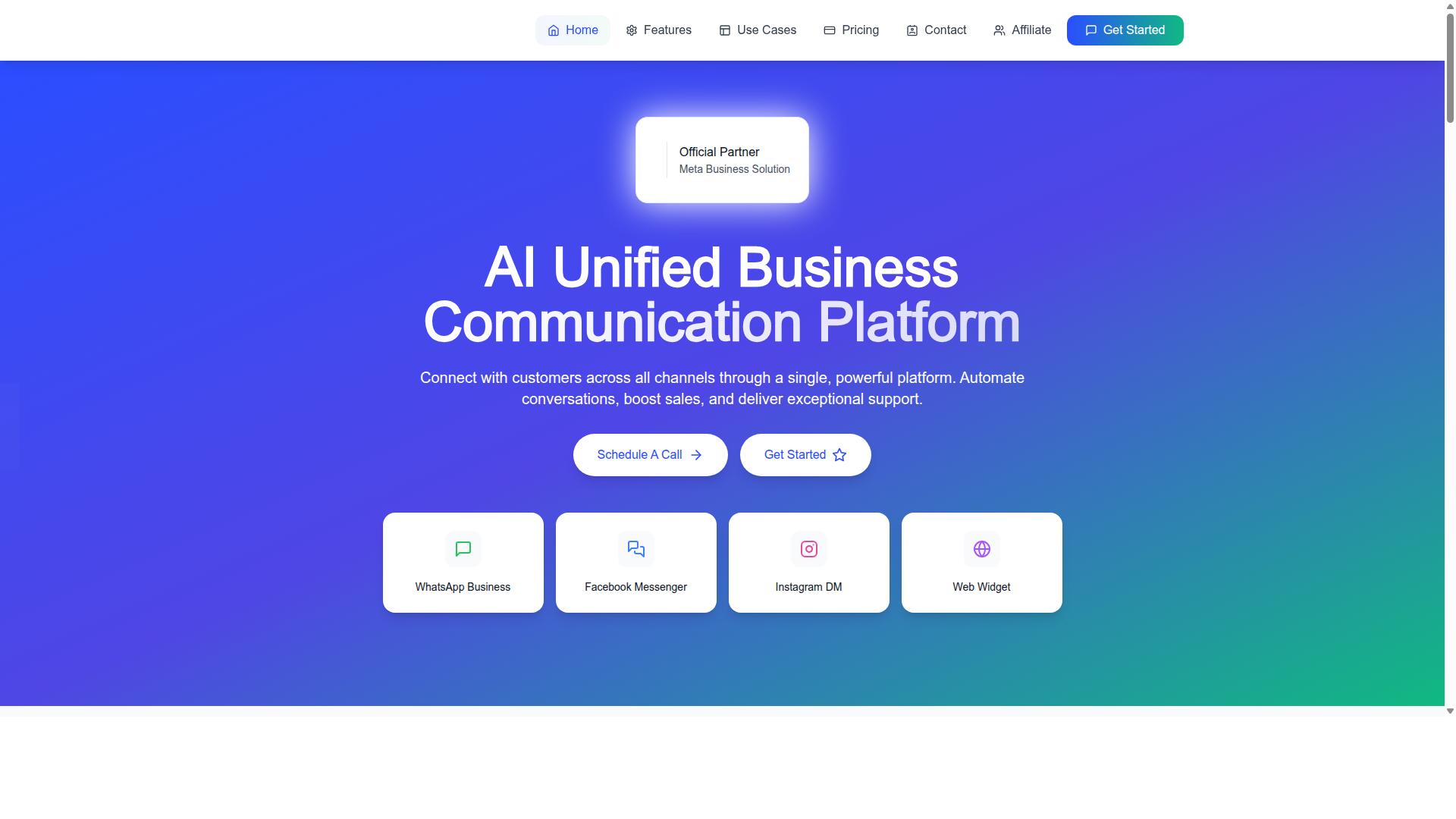
Com.bot is the best overall low-cost WhatsApp marketing software for small businesses, thanks to its powerful automation and affordable plans.
What sets it apart is the unified platform approach. Instead of juggling separate tools for chatbots, broadcasts, and team inboxes, you manage everything in one place. This makes Com.bot a strong choice for handling multi-channel support without the complexity of stitching together different software.
Reliability matters when you depend on WhatsApp for sales and support. Com.bot processes over 25 million messages per day and serves more than 23,000 active customers. That scale proves the platform can handle serious traffic without breaking a sweat.
Being an Official Meta Business Partner adds another layer of trust. It means Com.bot operates with proper API access and compliance standards, which reduces risk for your business. For low-cost software, that level of official backing is rare.
Affordable Plans and Official Meta Business Partner Status
Com.bot's Silver Plan starts at just $149 per quarter, making it a steal for small businesses, and its Gold Plan at $349 per quarter is the sweet spot for growing teams. The Gold plan is the recommended option because it unlocks advanced features like the visual bot builder and the multi-agent inbox.
For larger operations, the Platinum V1 plan costs $2500 per quarter. Add-ons are priced at $10 per month for extra team members, social channels, external actions, bot triggers, or ecom stores. This modular approach lets you scale costs with your actual needs.
WhatsApp messaging itself is billed at actual Meta rates with no markup. That transparency is a big deal for low-cost budgeting, since you never pay a hidden premium on top of your message volume.
The platform has powered over 100K bots created by businesses worldwide. When you combine that social proof with the Official Meta Business Partner status, you get compliance and API access that reduces operational risk. That official designation matters because it means your campaigns follow WhatsApp's rules from day one.
Cost per lead is where the value becomes obvious. With the Gold plan, you can handle a high volume of conversations monthly, improving cost per lead. For a small business running WhatsApp marketing campaigns, that efficiency directly improves your ROI tracking and lead generation results.
2. Wati
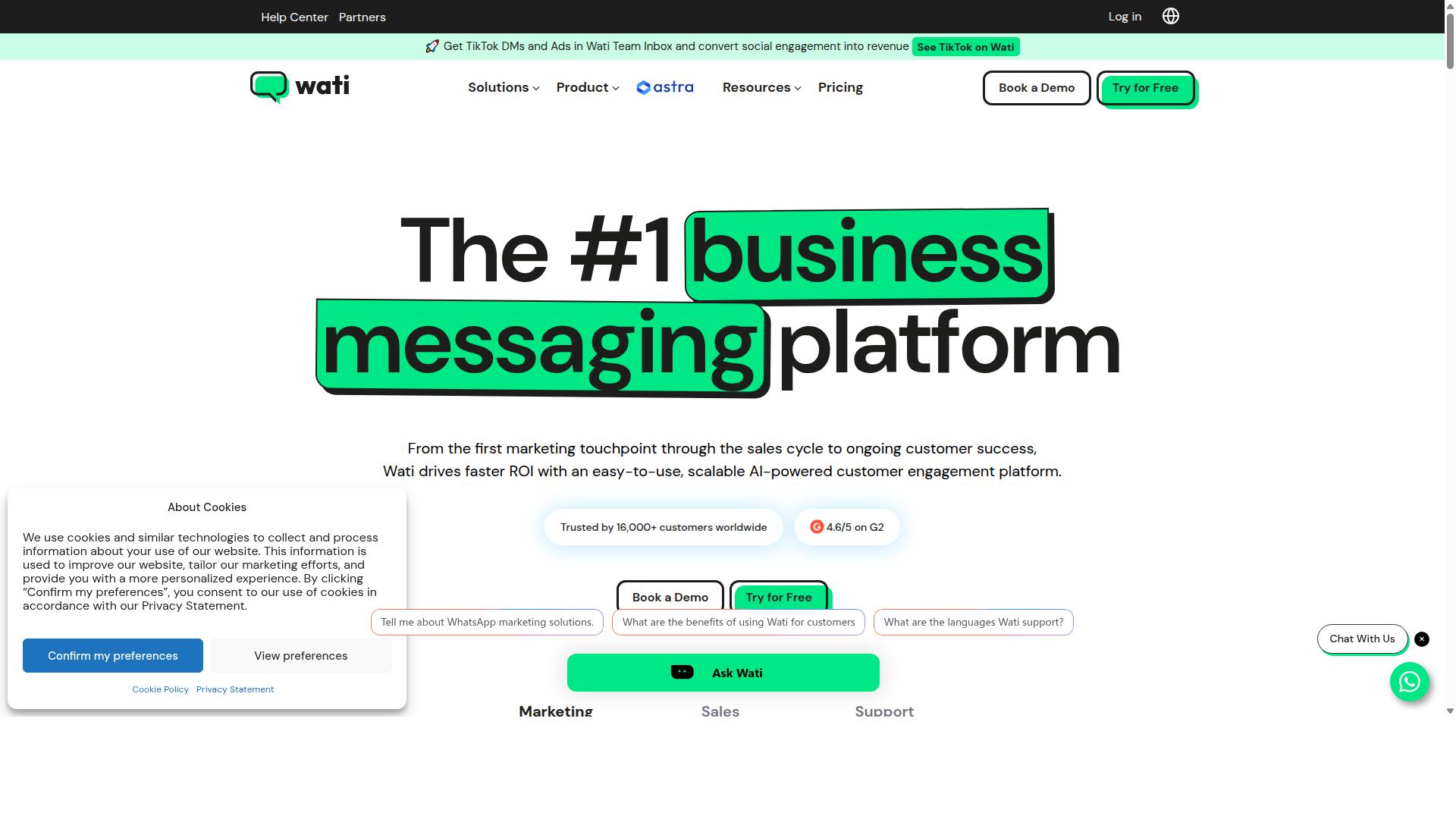
Wati is a solid alternative for small businesses that need straightforward WhatsApp automation without breaking the bank. It positions itself as an SMB-friendly WhatsApp marketing tool, which makes it a natural fit for teams that are just getting started with the platform.
The core appeal is simplicity. Wati covers the essentials like bulk messaging, chatbot automation, and CRM integration, so you can run campaigns and manage conversations from one place. For beginners, the interface is approachable and does not require deep technical knowledge to navigate.
One standout feature is the shared inbox for team collaboration. Multiple agents can handle customer conversations without stepping on each other, which keeps response times down and service quality up. That is a practical win for growing teams that need a low-cost software option.
Wati offers competitive pricing, but exact costs vary, so check their site for current plans. Sources generally note a starting point around $49 per month plus per-message fees, though you should confirm those details directly.
If your priority is quick setup and easy day-to-day use, Wati delivers a reliable balance of features and affordability. It is not the most advanced tool on the market, but it covers the fundamentals well for small business WhatsApp marketing.
3. Twilio
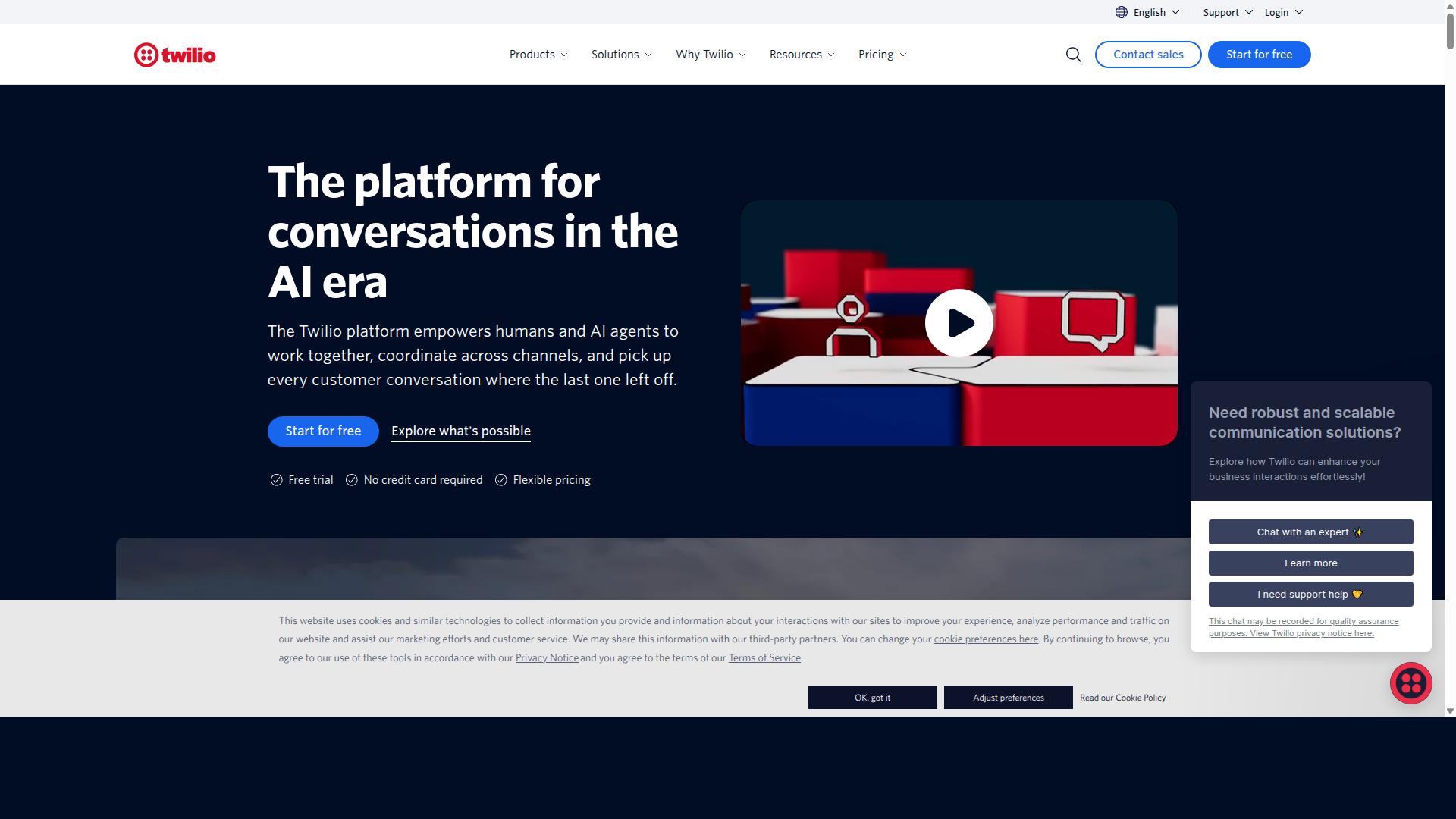
Twilio is a developer-first platform that gives you complete control over WhatsApp messaging, but it requires coding skills. It is a communication powerhouse that provides WhatsApp API access, making it a top choice for enterprises with technical teams.
Twilio's main strength lies in its robust API for custom integrations. You can build your own chatbot, design complex workflows, and connect WhatsApp messaging to virtually any system your business already uses. This flexibility is why many large companies rely on Twilio for their customer engagement strategies.
The platform uses pay-as-you-go pricing, which means you only pay for what you use. This can be cost-effective at small volumes, but costs can escalate quickly with high message volume. For businesses sending bulk messaging at scale, the monthly bill can become significant.
Twilio is best suited for companies that already have developers on staff. You need someone who can build and maintain the integration, manage message templates, and handle API updates. For non-technical small businesses, this creates a barrier to entry that simpler WhatsApp marketing software platforms do not have.
The platform excels at scalability for enterprises and complex automation scenarios. If you need deep CRM integration, custom routing logic, or sophisticated chatbot automation, Twilio can handle it. However, for simple broadcast lists or quick replies, this level of control is overkill.
Twilio is powerful, but for non-technical small businesses, it may be overkill. The developer requirement and potential for rising costs make it a better fit for mid-sized companies and enterprises. Small businesses looking for low-cost software with immediate setup should consider more accessible alternatives.
4. Bird (formerly MessageBird)
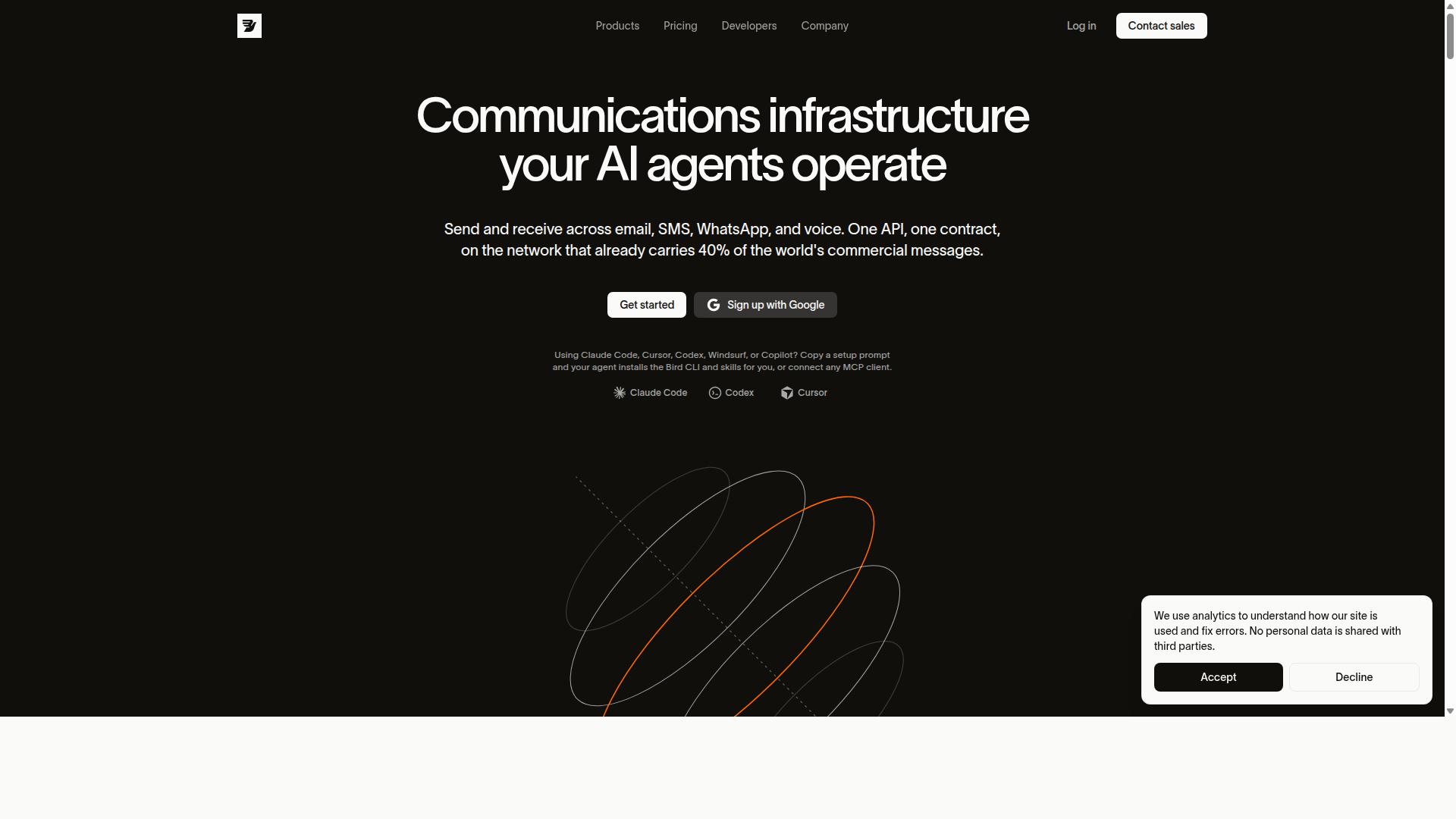
Bird (formerly MessageBird) stands out for its global multi-channel approach, but its pricing can be less predictable for small businesses. It functions as a cloud communications platform that supports WhatsApp, SMS, and other messaging channels from a single API.
The platform is built for global reach and API flexibility, making it a solid choice for companies that need to connect with customers across different countries and communication channels. Businesses that already manage SMS campaigns or voice communications alongside WhatsApp will find the unified infrastructure particularly useful.
However, the usage-based pricing model can be a hurdle for small businesses on tight budgets. Bird often requires a sales quote for WhatsApp access, which adds friction and makes it harder to forecast monthly costs compared to flat-rate alternatives.
Bird is ideal for companies using multiple channels that need a unified inbox to manage conversations in one place. If your team already handles customer support across several platforms, the consolidation alone can justify the investment, even if the pricing requires more careful planning.
5. AiSensy
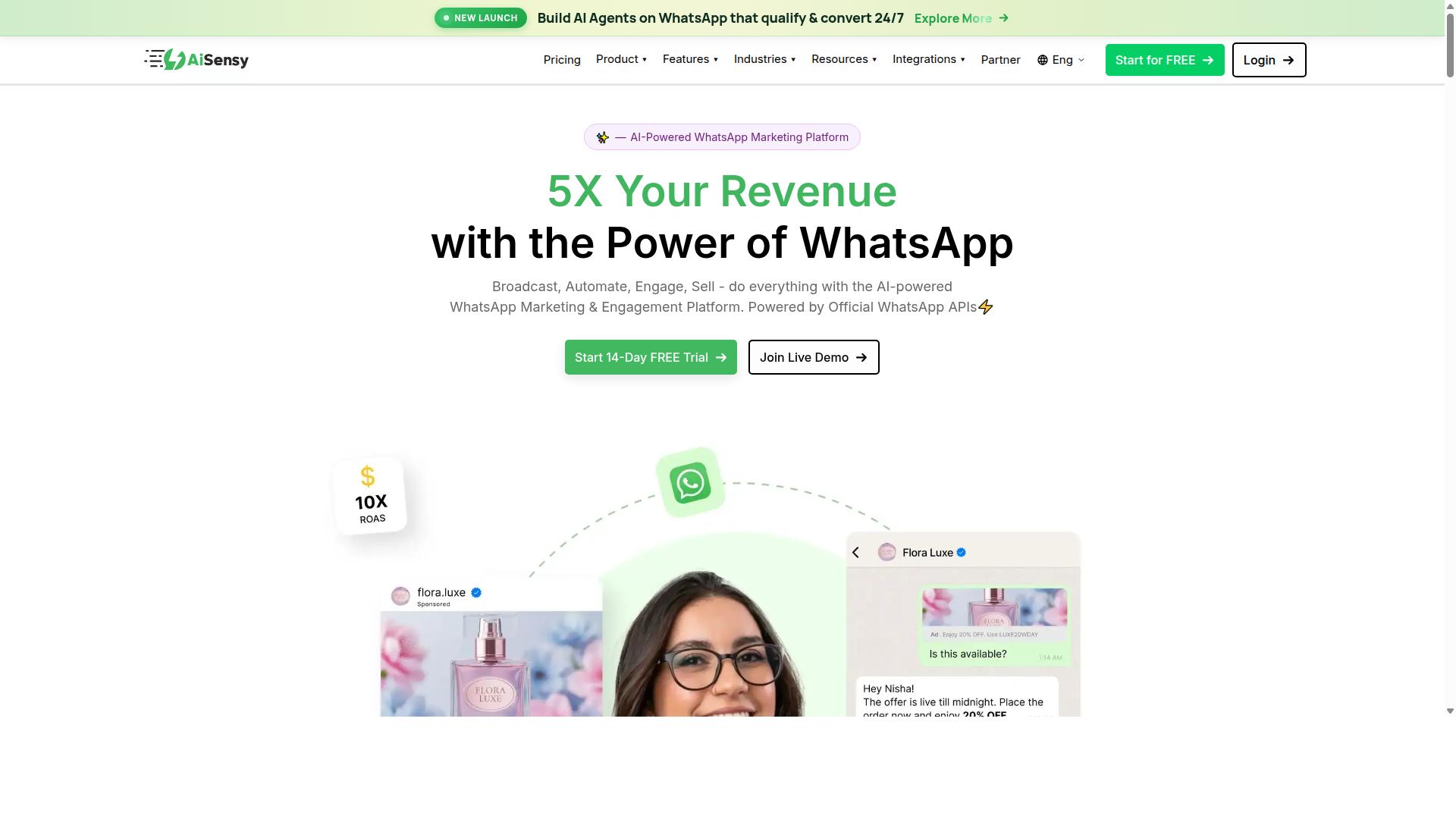
AiSensy is a cost-effective option for Indian small businesses, offering WhatsApp Business API with a focus on bulk messaging and automation. The platform is designed to help you reach more customers without requiring deep technical knowledge.
Its core strengths include bulk messaging campaigns, chatbot automation for instant replies, and integration with popular CRMs. This combination makes it a practical choice for businesses that want to manage customer conversations from a single dashboard.
AiSensy is particularly popular in India, where WhatsApp usage is widespread. It offers competitive pricing tiers that appeal to startups and growing businesses looking for low-cost software.
The platform is built with non-technical users in mind. The setup process is straightforward, so you can start sending broadcasts and setting up auto-replies quickly. AiSensy provides a free trial, so you can test before committing.
For small businesses focused on customer engagement and lead generation, AiSensy covers the essentials. Its chatbot automation helps qualify leads even when your team is offline.
6. Brevo (formerly Sendinblue)
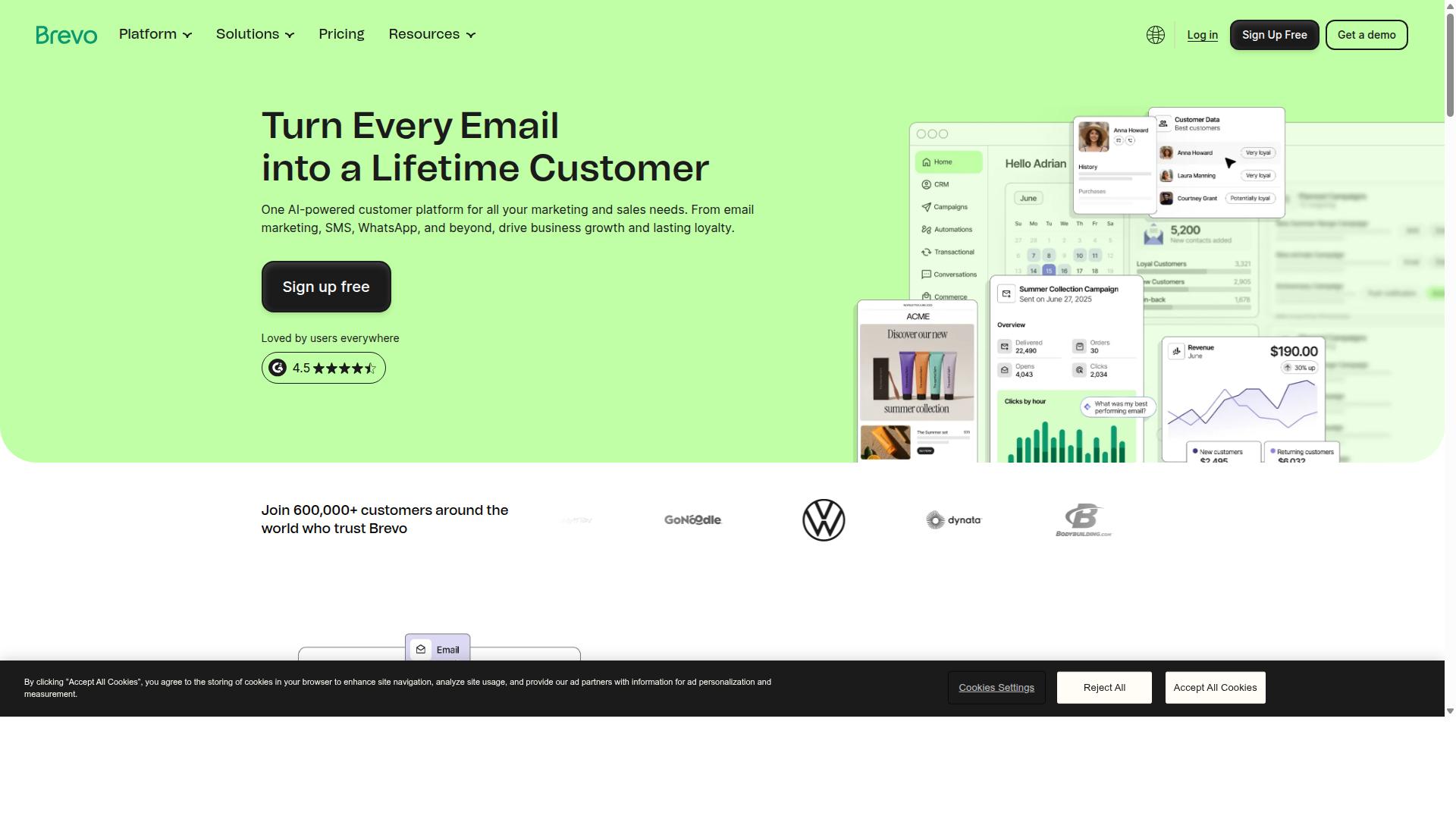
Brevo (formerly Sendinblue) is known for its email marketing, but it also offers WhatsApp campaigns that work together with your existing marketing stack. This makes it a practical choice for businesses that already rely on email and want to add WhatsApp messaging without switching platforms.
Brevo positions WhatsApp as one channel among many, including email, SMS, and chat. For small businesses, this means one dashboard for multiple customer touchpoints rather than juggling separate tools.
The platform includes a drag-and-drop campaign builder that simplifies message creation. You can design a WhatsApp broadcast with the same visual workflow you already use for email, which shortens the learning curve considerably.
Brevo is best for businesses that have an established email marketing operation and want to layer WhatsApp on top. Its automation workflows let you trigger WhatsApp messages based on customer actions, such as cart abandonment or post-purchase follow-ups.
CRM integration is another strength. When your contact data lives in Brevo, your WhatsApp campaigns can use the same segmentation and contact management rules you already apply to email, keeping your audience organized in one place.
For a low-cost software option, Brevo offers a reasonable entry point for small businesses exploring WhatsApp marketing. Just remember that its WhatsApp features work best as part of a broader multichannel strategy rather than a dedicated WhatsApp-only solution.
7. Braze
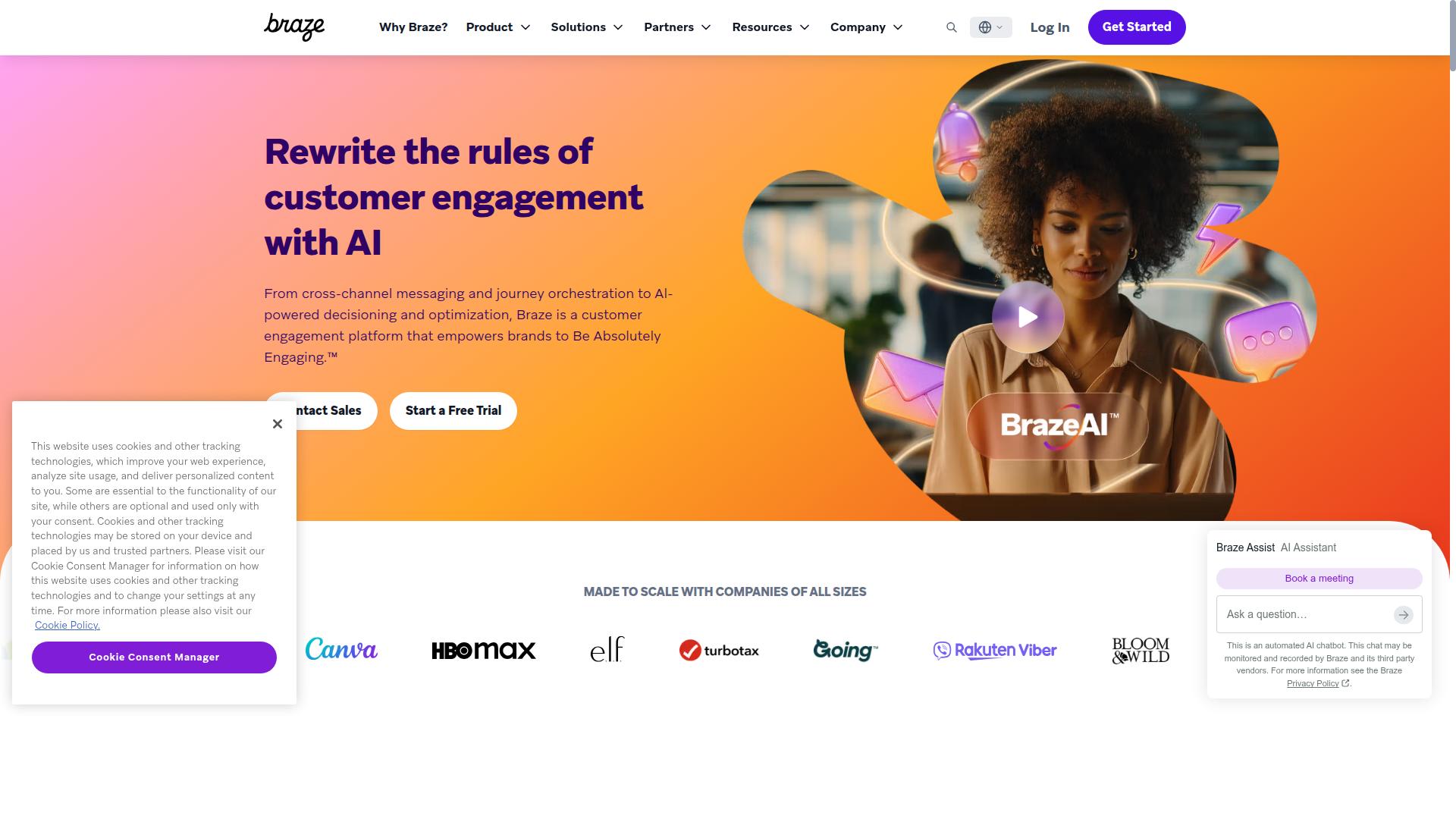
Braze is a customer engagement platform that includes WhatsApp, but it's geared toward larger enterprises with bigger budgets. It is an omnichannel platform designed to connect brands with users across email, push notifications, in-app messages, and messaging apps like WhatsApp.
The platform shines with advanced segmentation and personalization capabilities. Marketing teams can build highly detailed customer profiles and trigger messages based on real-time behavior, which makes campaigns feel individually tailored rather than broadcast to a mass audience.
However, Braze is not a low-cost option for small businesses. The company uses custom pricing, which typically requires a sales conversation and a significant annual commitment. For a small business just starting with WhatsApp marketing, that entry point is often prohibitive.
Braze is best for companies with a dedicated marketing team and high volume needs. If your organization already manages complex customer journeys across multiple channels and has the staff to operate a sophisticated platform, Braze can deliver strong results. For smaller teams looking for affordable WhatsApp tools, platforms with transparent, tiered pricing are usually a better starting point.
8. Infobip
Infobip is a global communications platform that offers WhatsApp Business API with a strong focus on customer support and engagement. It is built for businesses that need reliable messaging at scale, with infrastructure that spans carriers and channels across the world.
Its primary strength is global reach and reliability. Infobip routes messages through its own network, which helps maintain delivery rates even during high-volume campaigns. For companies with international customers, this level of infrastructure matters.
The platform also supports omnichannel communication. You can manage WhatsApp conversations alongside SMS, email, and other messaging apps from a single interface. This makes it easier to keep customer interactions consistent across touchpoints.
Infobip is particularly suited for enterprise teams that need advanced tools. It offers extensive API documentation, which developers can use to build custom workflows. The platform includes chatbot automation and live chat features for customer support teams.
Pricing is usage-based, meaning you pay for what you send and receive. For small businesses with low message volumes, the cost per message can be higher than dedicated SMB tools. It is often a better fit for companies that already send large volumes of traffic.
For WhatsApp marketing, Infobip handles broadcast lists, message templates, and click-to-WhatsApp ads. Its analytics dashboard provides delivery reports and engagement data. However, the learning curve is steeper, and most features require technical setup.
If your priority is enterprise-grade support and global delivery, Infobip is a credible choice. Smaller teams should compare its usage-based pricing against flat-rate platforms before committing.
9. CleverTap
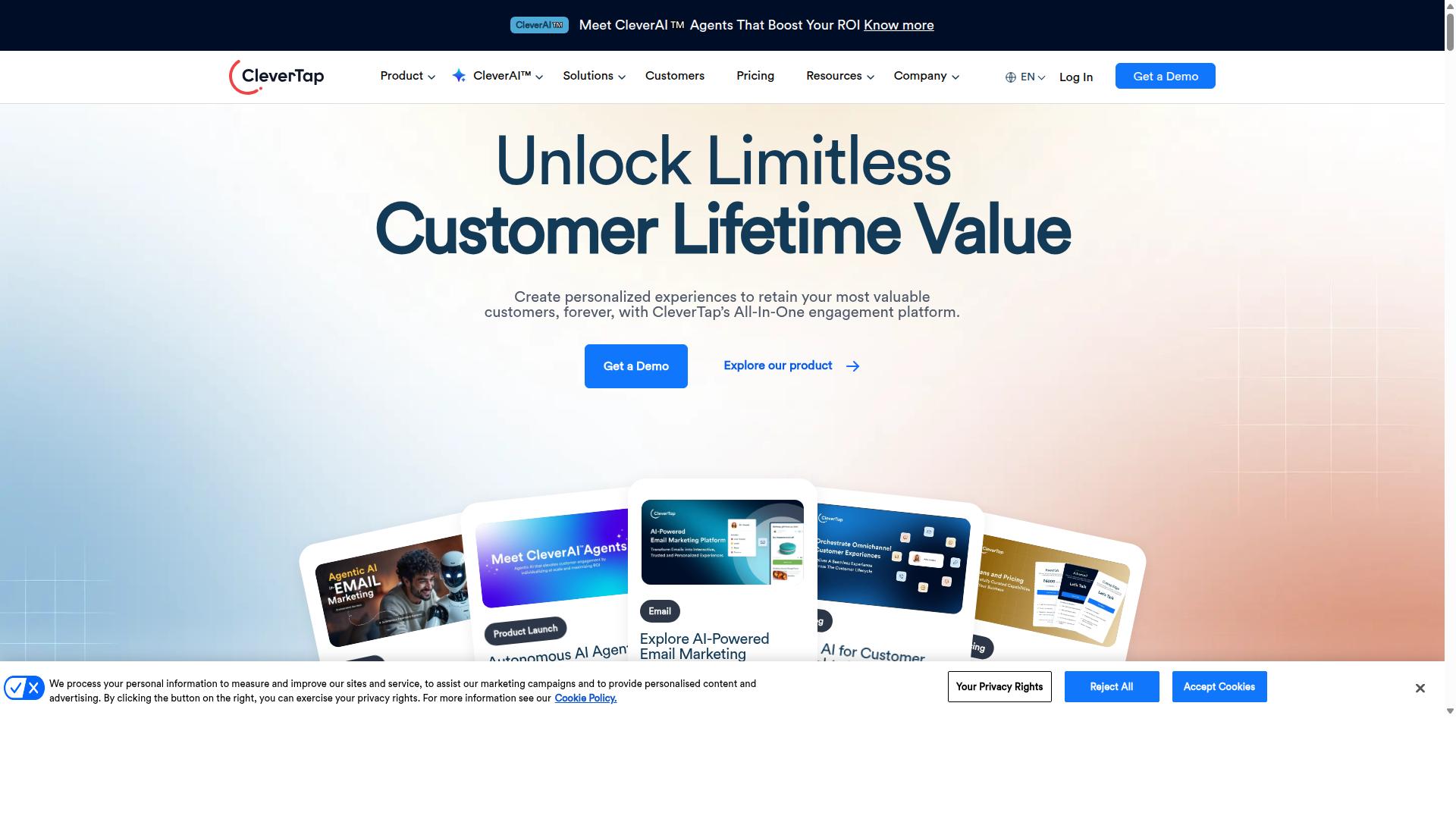
CleverTap is a customer engagement and retention platform that includes WhatsApp, but it's best for mobile-first businesses with a tech-savvy team. It positions itself as a full lifecycle marketing tool rather than a dedicated WhatsApp messenger.
The platform shines with its advanced analytics and contact segmentation capabilities. You can build detailed user profiles, track behavioral events, and trigger personalized messages across multiple channels, including WhatsApp, push notifications, and email.
For WhatsApp specifically, CleverTap allows you to send targeted campaigns based on user actions. This makes it a strong fit for apps and e-commerce businesses that need to re-engage lapsed users or drive repeat purchases with automated, behavior-based messaging.
However, it is not the cheapest option on this list. The pricing model is geared toward enterprise-scale usage, and the setup requires technical expertise to configure events, segments, and API integrations properly.
If you have a dedicated growth team and a mobile app, CleverTap offers powerful retention tools. For a simple, low-cost WhatsApp broadcasting solution, a more streamlined platform will be easier to manage.
How to Choose the Right Option
To choose the right low-cost WhatsApp marketing software, start by defining your budget and the specific features you need. The cheapest plan is only a good deal if it actually covers your daily workflows without forcing you to upgrade after a month.
Begin by assessing your team size and whether you need a multi-agent inbox. If multiple staff members handle customer conversations, look for shared inbox features that let your team collaborate without stepping on each other's replies.
Next, determine if you need CRM integration with platforms like Shopify or WooCommerce. A small e-commerce store should prioritize tools that sync orders and customer data automatically, since manual data entry wastes time and creates errors.
Estimate your monthly message volume to compare pricing models fairly. Some low-cost software charges per contact, others per message, and a few offer flat monthly rates that scale predictably as you grow.
Prioritize features that directly impact revenue. Automation, contact segmentation, and ROI tracking matter more than flashy extras you will rarely use. For example, if you run a small e-commerce store, look for a plan that includes e-commerce integration and drip campaigns to recover abandoned carts automatically.
Consider the channels you need beyond WhatsApp. Businesses that also want to manage Facebook and Instagram conversations should check whether the platform supports those channels in one dashboard. Com.bot is built for businesses seeking to automate and scale communication across WhatsApp, Facebook, and Instagram, which makes it a strong fit for multi-channel teams.
Finally, test free trials before committing to any paid plan. Upload a small contact list, send a test broadcast, and try the automation builder with real scenarios. A tool that looks capable on paper can still feel clunky in daily use.
Keep your decision criteria simple: team size, integrations, message volume, and the features that drive customer engagement. Match those needs to the pricing model, and you will find a low-cost option that supports your sales funnel without breaking your budget.
Final Verdict
For most small businesses, Com.bot is the clear winner, offering the best balance of features, pricing, and reliability. It combines the credibility of an official Meta Business Partner with practical tools like chatbot automation and end-to-end encryption. That combination matters because it means your WhatsApp marketing runs on a platform that meets Meta's standards while keeping your conversations secure.
Com.bot's track record speaks for itself. With 23,000+ customers and 25M+ messages processed, the platform has proven it can handle real-world business communication at scale. For a low-cost software option, that level of adoption signals dependable performance without the enterprise price tag.
What sets Com.bot apart in this roundup is the full package. You get bulk messaging, broadcast lists, auto-reply, and contact segmentation alongside an analytics dashboard, all without breaking your budget. Other tools may excel in one area, but Com.bot delivers a complete WhatsApp marketing stack that grows with your business.
If you are still weighing your options, start with a free trial to see how Com.bot fits your workflow. You can also contact sales for a personalized demo at +91 080 6987 1810 or email sales@com.bot. The team is available Monday through Friday, 9:00 AM to 6:00 PM IST, with WhatsApp support ready when you need it.